
Separate the Fulton County Property Tax Records
These records are not kept in one office. The Real Property Tax Service Agency, municipal assessors, local and school collectors, and the County Treasurer each hold a piece of the puzzle. Start with the assessment roll. It sets values and exemptions for one roll year. The tax bill comes next, applying rates and levies to taxable value, while payment records track collection activity and delinquency and enforcement files may shift to the Treasurer. Sorting out the record type and tax year prevents a paid city bill from being mistaken for a paid school or county bill.
| Tax record | What it shows | Primary route |
|---|---|---|
| Assessment roll | Owner display, SBL, assessed and taxable values, exemptions | County archive and local assessor |
| Current tax bill | Levy, rates, installments, balance for one cycle | Municipal or school collector |
| Delinquent account | Unpaid amount after local collection closes | County Treasurer |
| Tax-lien list | Published parcels and enforcement status at a stated date | Treasurer tax-sale page |
| Foreclosure notice | In-rem proceeding and parcel notice | Treasurer and court records |
Choose the Correct Fulton Municipality and Roll Year
Assessment in Fulton County is local. Search the municipality tied to the parcel itself, not the postal city on the envelope. The county's roll archive organizes tentative and final rolls by municipality. Years reach back to at least 2016. Whenever you copy a value, copy the SBL, municipality, roll year, and roll status too. ZIP codes mislead here. Johnstown 12095 spans city and town areas. Gloversville 12078 crosses the city line. The municipality field beats the ZIP every time. The official assessment-roll archive is the county's year-by-year gateway.
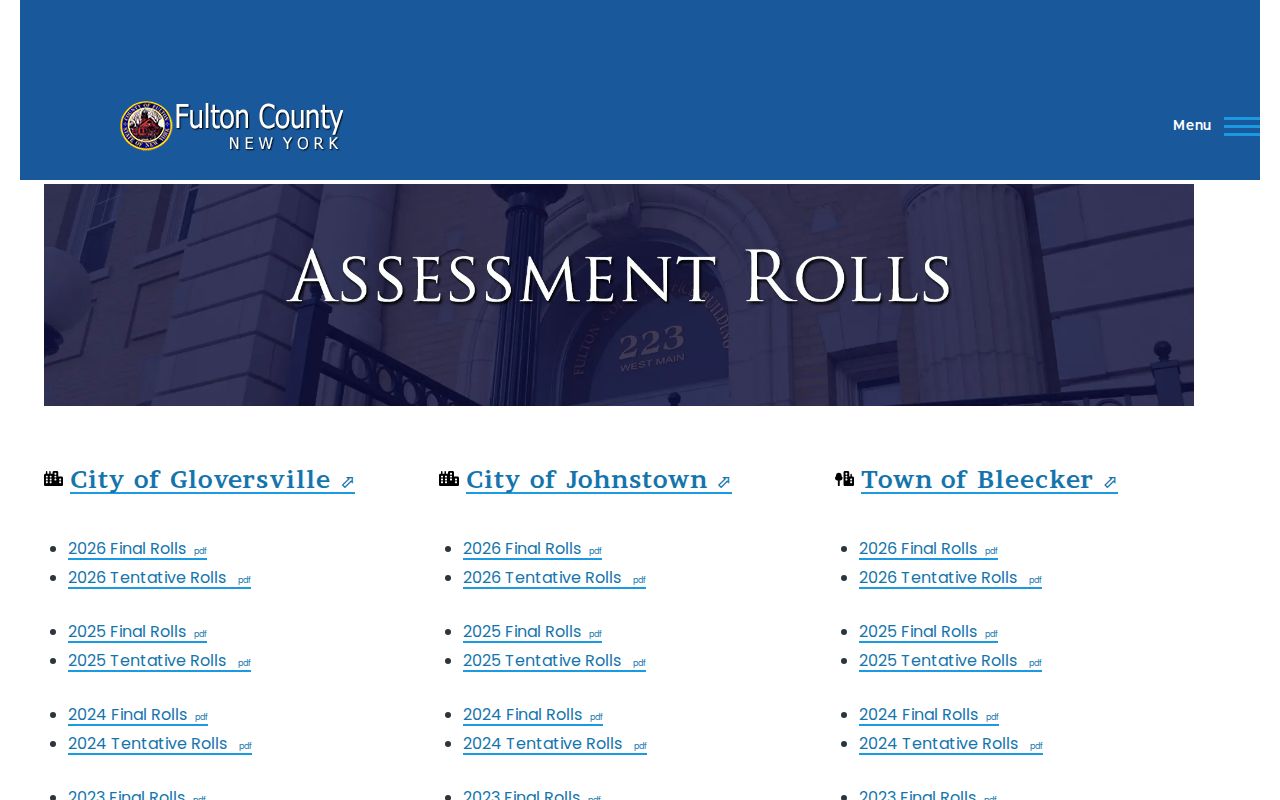
Every value needs its municipal roll and year attached.
Read Assessed, Taxable, and Market Values Correctly
Three numbers get confused constantly. Assessed value is the local assessor's figure used inside the tax system. Taxable value subtracts exemptions and may differ. Market value estimates full worth. New York equalization rates and residential assessment ratios let you compare parcels where municipalities assess at different percentages of market value. A deed's stated consideration is a recorded transaction fact, not the assessor's market estimate. An assessment is not an appraisal either. It never promises a sale price. When weighing one parcel against another, keep property class, inventory, exemptions, roll year, and the municipal assessment level in view, since the formula and rate must match the right municipality and year.
Follow the Fulton County Collection Calendar
Timing decides who takes your payment. Local collectors handle the current cycles, and the County Treasurer takes delinquent school, village, town, and county taxes once the local period closes. Gloversville shows the pattern plainly: school bills on September 1, county bills on January 1, city bills on April 1. So name the jurisdiction and levy. A request for current taxes means little without both. The Treasurer payment page lays out collection periods, payment methods, and how delinquent accounts are routed.
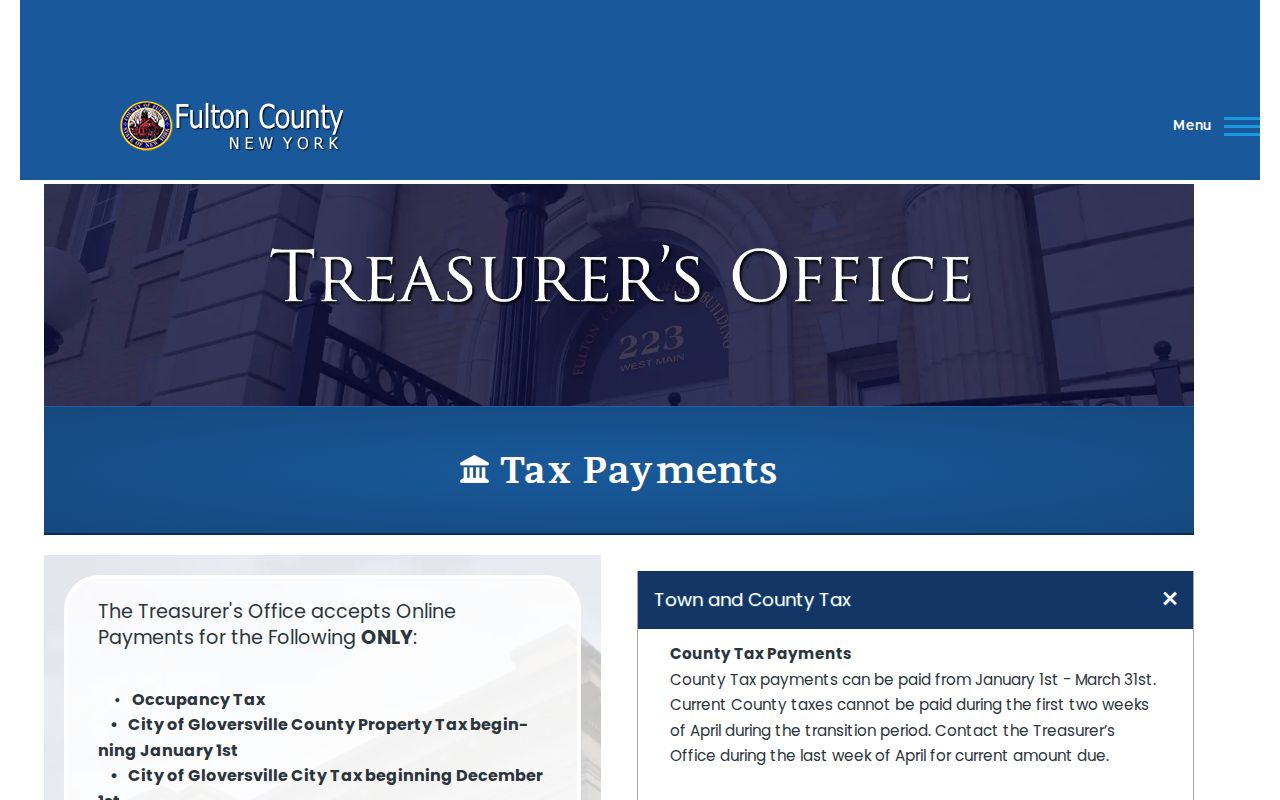
The published guidance settles the routing question. It shows whether an unpaid bill still belongs with a local collector or has already moved to county hands.
Check Exemptions and Annual Assessment Dates
Exemptions change taxable value without touching the parcel itself. Assessors administer them, and deadlines matter. Gloversville and Johnstown assessor pages mark March 1 as the taxable-status and exemption deadline, May 1 as tentative-roll publication, the fourth Tuesday in May as grievance day, and July 1 as the final roll. Verify eligibility, filing forms, and the current calendar with the assessor serving the parcel. One roll's exemption does not carry forward. Owners and years change. Note the exemption code or amount, then ask the assessor what it meant for that roll. STAR follows New York's state and local administration rules. Check it through the official assessor and Department of Taxation and Finance resources. That path beats guessing at eligibility.
Research Fulton Tax Liens and Foreclosure Status
The Treasurer publishes tax-lien material, in-rem foreclosure notices, parcel-status contacts, and auction information. Published lists are snapshots. A parcel can be redeemed, withdrawn, corrected, or advanced after the list appears. Confirm status directly. Search payments in the order the county instructs. A tax-lien entry is not a completed foreclosure or a deed to a bidder, and the Fulton County tax-sale page provides the downloadable parcel lists and status guidance.
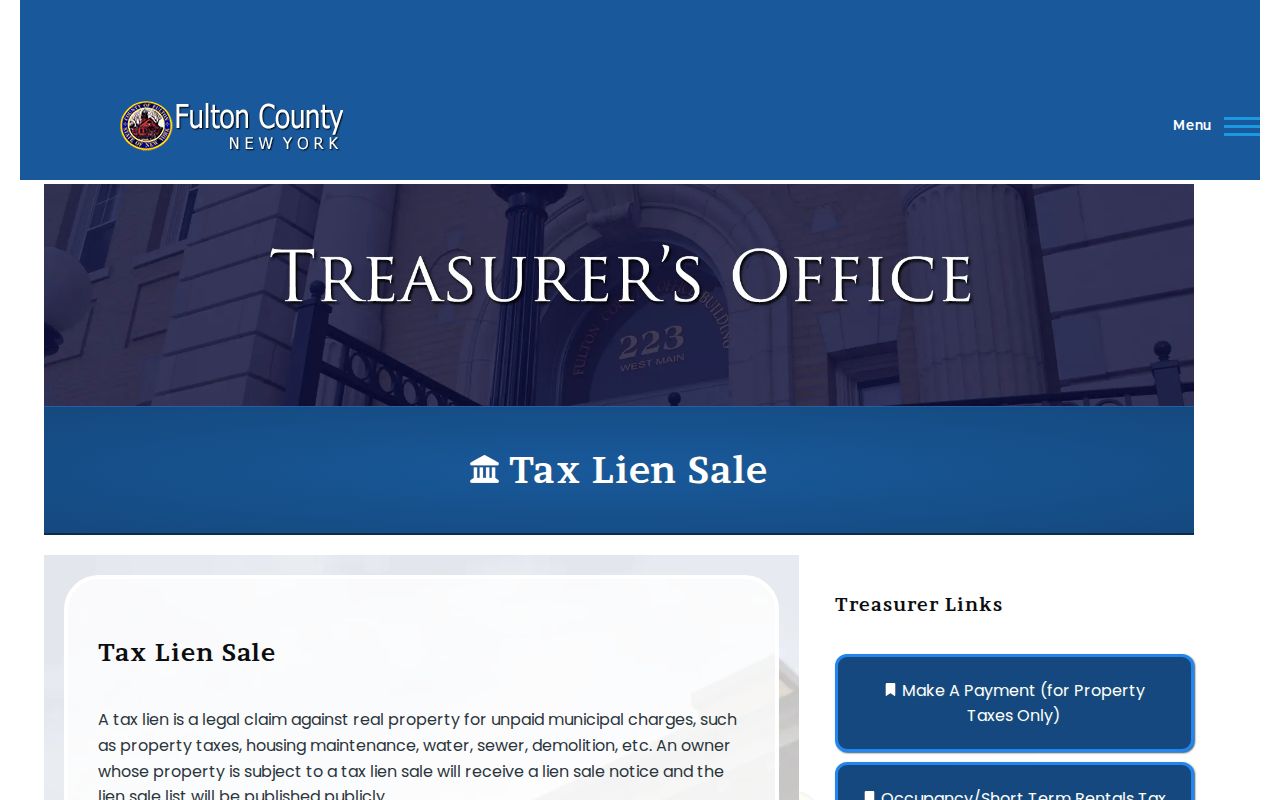
A published tax lien list is only the first step in Fulton County; the Treasurer's current confirmation settles the foreclosure status.
Understand Fulton County Auction Warnings
Fulton's real-property tax-foreclosure auction runs online only. County terms sell everything as is and convey title by quitclaim deed. Investigation falls on the bidder. Cross-check any auction row against Beacon, the latest assessment roll, tax maps, the County Clerk deed and lien index, municipal code records, access, occupancy, and the legal description before bidding. Do the legwork before the auction closes. The official auction page displays the county's due-diligence warning and its parcel table.
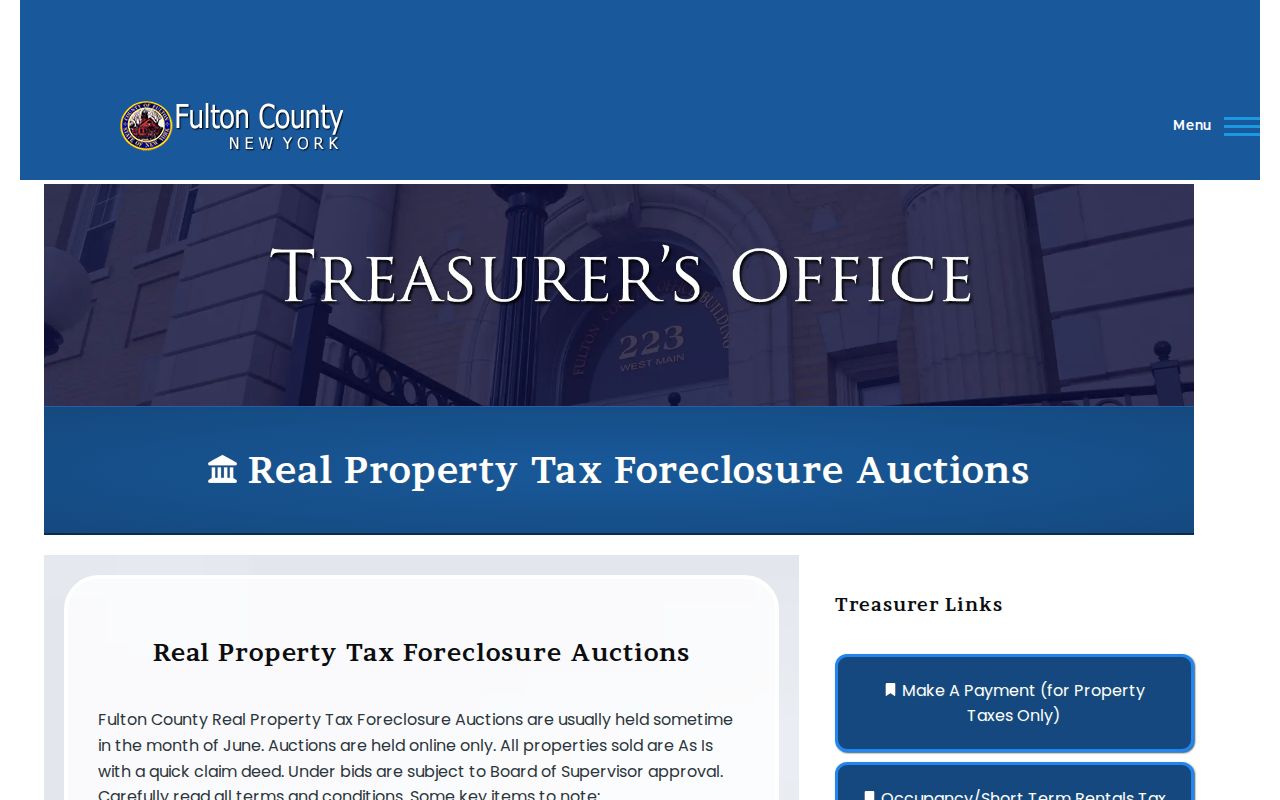
A low bid or assessment figure promises nothing. Condition, access, market value, and clear title all remain the bidder's problem to verify.
Review or Challenge a Fulton Assessment
Begin with the tentative roll and the parcel inventory behind it. Check every line. The SBL, property class, lot dimensions, building counts, and exemptions must all point to the right parcel. That parcel should sit in Fulton County. Ask the local assessor to explain the inventory and supply the worksheets behind it. Then work within the published grievance calendar. Any comparable sales you submit should match the correct valuation date. They should also match the right municipality, since evidence from the wrong market or town weakens a case quickly. Remember what this process is for. The Board of Assessment Review handles assessment disputes only. It does not handle Treasurer payment fights or deed-title questions.
Keep a paper trail throughout: the tentative entry, your application, the evidence, the determination, and the final-roll entry. Route problems to the office that owns them. A payment dispute belongs with the collector listed for that levy. An ownership question calls for the latest deed, read against the assessment record. That discipline keeps Fulton County property tax records honest. They were never built to answer every question.
Recognize the Limits of Fulton Property Tax Data
Know what tax data can actually tell you. A roll does not certify title. A bill does not fix boundaries. An assessed value is not a prediction of what a buyer will pay. Online balances shift as penalties accrue, corrections post, payments bounce back, or a delinquent account moves to enforcement, and published tax-sale lists change too. Before you pay, appeal, close a transaction, or answer an enforcement notice, record the date you accessed the roll or bill and get written confirmation from the responsible office in Fulton County.
Record the context. A useful Fulton tax citation includes the SBL, municipality, levy, tax or roll year, record status, and the office that supplied it.
Preserve Proof of a Fulton County Tax Finding
Documentation wins arguments. Save the bill or roll page. Save the payment confirmation, the SBL, the levy year, and the collector's name. When a parcel moves from a local collector to the County Treasurer, write down the handoff date. Then request the current county amount instead of trusting a stale local balance. For closings or litigation, ask the responsible office for official confirmation of the tax status. Downloaded Fulton County property tax records can be superseded by payments, penalties, corrections, or court action. File that confirmation with the parcel record it belongs to.