
Understand What a Fulton County Property Value Means
Several numbers compete for attention in Fulton County property records, and each answers a different question. Assessed value sits inside the local assessment system. Market value is only an estimate of full value, best read alongside the municipality's equalization rate or residential assessment ratio. Taxable value shrinks further once exemptions apply. A deed's consideration records what the parties wrote, which may or may not reflect an arm's-length sale. None of these figures automatically equals an appraisal.
| Value type | Meaning | Where recorded |
|---|---|---|
| Assessed value | Local value used in tax administration | Parcel record and assessment roll |
| Taxable value | Value after applicable exemptions | Roll and tax calculation |
| Market or full value | Estimate interpreted through assessment level | Assessment system and state rate context |
| Last sale consideration | Amount or value stated in a deed | County Clerk instrument |
Look Up Fulton Assessed Value by SBL
Start any lookup with the parcel identifier. Beacon and Image Mate all search by address, owner name, or property ID. But the values mean nothing until they are confirmed. Check the municipality, situs, and exact SBL. Then open the matching municipal final roll and note its year. The county describes its assessment application as containing ownership, inventory, assessed value, images, and tax-map information, updated nightly. The final roll remains the stable annual citation for parcel values. The RPTSA page describes those parcel-value resources.
The official county page makes the point plainly: value research should begin with the parcel identifier and municipal assessment context.
Apply New York Equalization Context
New York municipalities do not all assess at full market value. The state publishes equalization rates and residential assessment ratios. It explains how assessed value relates to market value under each. Use the rate for the correct municipality and roll year. A countywide label alone will mislead you. Raw assessments cannot be compared across municipalities without adjusting for differing assessment levels. Two towns can value identical homes at very different fractions of market value.
Equalization serves tax allocation and comparison. It does not turn a public assessment into a private appraisal. Nor does it promise a selling price. Property condition, rights conveyed, financing, and exposure can all move the final number. So can the circumstances of a transaction.
Read the Fulton Annual Value Calendar
Gloversville and Johnstown assessor pages lay out a consistent local cycle. Valuation dates to July 1. Taxable status and exemption filings close March 1. The tentative roll appears May 1. Grievance day falls on the fourth Tuesday in May. The final roll lands July 1. A value encountered between stages may carry a different status. So cite tentative or final explicitly whenever you quote a figure. The county roll archive lists municipal files by year.
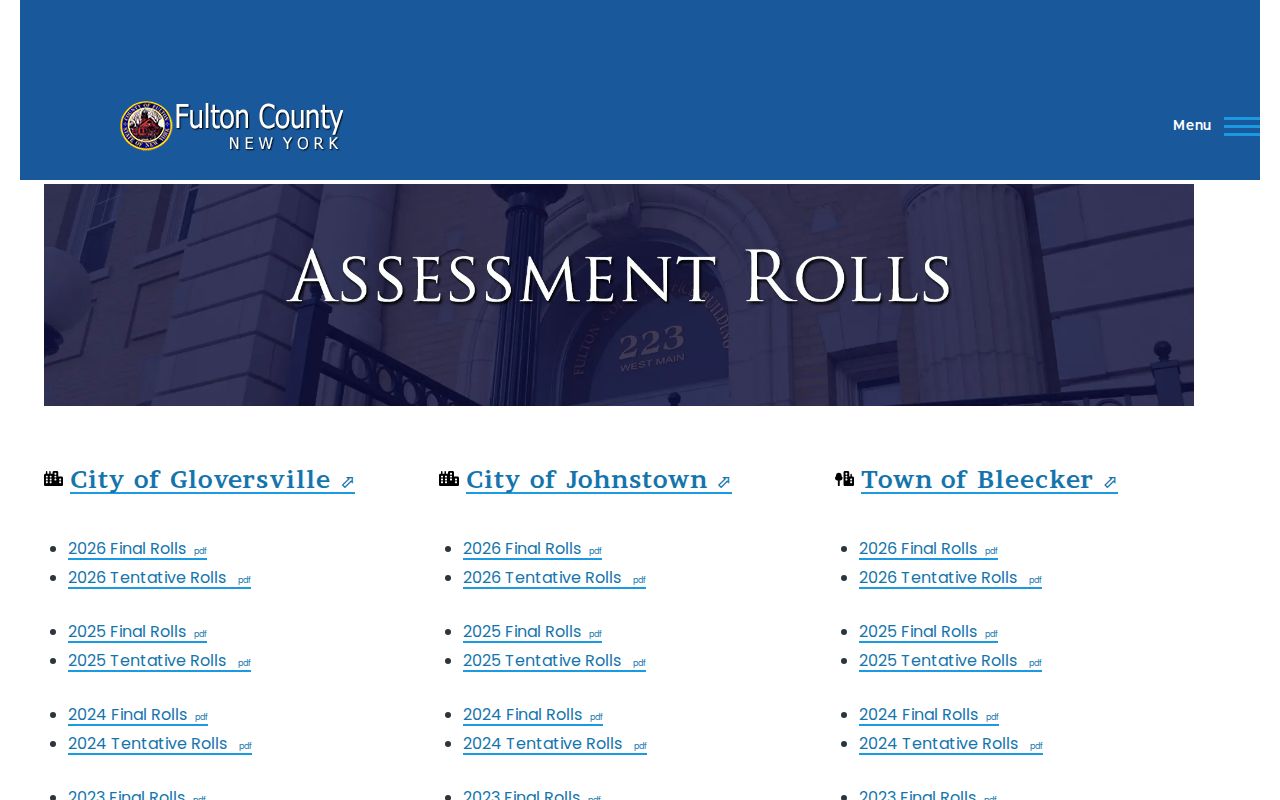
Successive rolls let you trace a parcel-specific value history without inflating one current figure into a market trend claim.
Separate Exemptions from Fulton Assessed Value
Exemptions cut taxable value without touching the assessor's estimate of the parcel itself. Record assessed value, taxable value, and each exemption entry separately. Eligibility and filing questions belong with the local assessor. The city calendars set March 1 as the exemption deadline. Never assume an exemption survives a change in ownership or use.
Tax bills add levy rates and collection details. Those pieces sit apart from what any property value number means. A high bill can reflect rates and districts as much as value. A low taxable value can simply reflect exemptions.
Use Deed Consideration as a Separate Sale Fact
A County Clerk deed may state consideration, transfer information, or related references. Read the instrument itself. Judge whether the transaction looks arm's length before treating the amount as a comparable sale. Family transfers, nominal consideration, quitclaims, estate deeds, referee's deeds, and tax-foreclosure conveyances can occur. These can differ sharply from ordinary market sales. SearchIQS online deed coverage begins September 1, 1983. Earlier sale history continues in office indexes and deed books. Always match the legal description or SBL, never just the street name.
Explain Fulton Value Changes with Record Evidence
A value change can follow a reassessment, an improvement, a demolition, or a parcel split or combination. It can also follow a classification change, an exemption change, or a correction. Compare parcel inventory, permits, planning files, aerial years, and successive rolls before drawing conclusions. Gloversville's South Kingsboro planning record shows how an assessment combination tied to a proposed subdivision can blur parcel identity. That must be resolved before values are compared. Population history or broad economic context may raise useful questions.
But it cannot prove any individual parcel's trend. Gloversville's industrial legacy and Johnstown's older housing stock make parcel-specific inventory especially important here.
Know What Fulton Property Value Does Not Tell You
Assessed value establishes none of the following: current sale price, condition, clear title, legal use, boundaries, or replacement cost. It sets none of those terms. Auction materials state it plainly. County tax-foreclosure properties are sold online, as is, by quitclaim deed. An assessment or minimum bid is never a warranty of value.
Value limit. Treat assessed value as a tax-administration record. Obtain a qualified appraisal or other appropriate professional analysis when a current market conclusion is required.
Assessment: the official taxable-property valuation process. Equalization rate: the state measure relating total assessed value to market value. Consideration: value stated in a conveyance. Reassessment: a new valuation determination.
Create a Fulton County Parcel Value Timeline
A value timeline works best when it rests on the final roll. List assessed value, taxable value, exemptions, property class, and inventory for each year you include. Review the matching deed before you add a sale price. Then flag any non-arm's-length conveyance. Note parcel splits, combinations, permits, or demolitions beside the year they happened. Assessment levels differ by municipality. Use the state-published level for each jurisdiction instead of comparing raw figures across city and town lines. Dated public evidence is what makes the timeline defensible. That holds provided assessment, taxation, and market analysis stay separate.
Leave tax amounts out of the timeline. School, city, town, village, and county levies can move a bill in either direction. That can happen without any change in the parcel's value. An exemption works the same way in reverse. It shifts taxable value while assessed value holds steady. Keep the three figures in separate, dated columns when the distinction matters. That discipline keeps the value story clean.