
Verify the Fulton County Current Owner of Record
Two dates actually govern the current-owner question in Fulton County. One belongs to the assessment record. The other is the recording date on the newest deed. Begin with Beacon or Image Mate to pull the parcel, municipality, displayed owner, situs, mailing address, and SBL. Then query the Fulton County Clerk's SearchIQS index for the most recent deed matching that parcel, and report both sources with their dates rather than forcing them into a single answer.
Owner display: copy the assessment name exactly as shown. Parcel key: keep the full SBL intact. Roll context: record the municipality and roll year. Deed check: capture the grantee, recording date, instrument type, and the book/page or instrument number.
Why the Fulton Assessor Name Can Lag a Deed
Fulton County's assessment application updates nightly. Annual rolls, though, still reflect fixed assessment cycles. A deed can record after a roll was prepared. An estate can remain in administration, or a transfer may sit pending review before the displayed assessment owner changes. So nightly refreshes do not give every source one shared effective date. The RPTSA page describes the ownership and parcel information available through the county route.
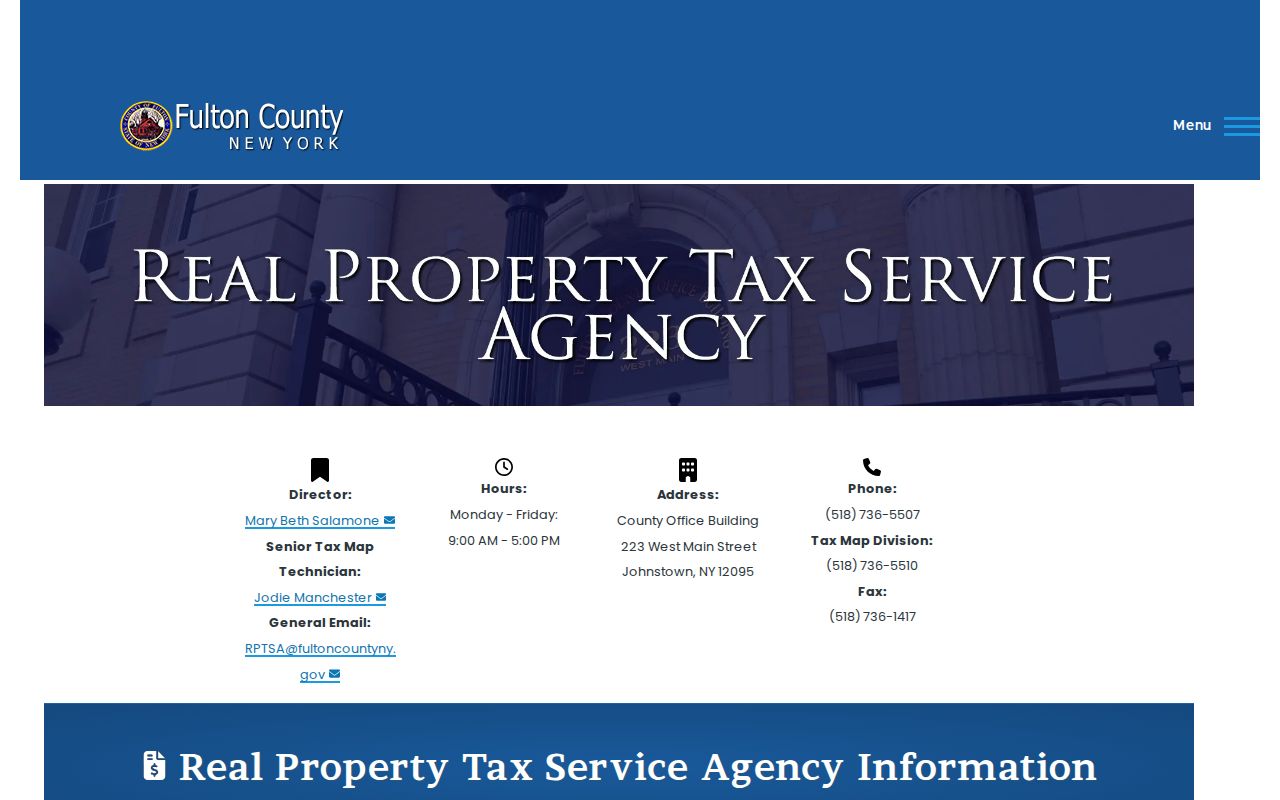
County guidance supports the split approach. Treat the assessor result as a timely locator, and reserve the recorded-transfer check for the Clerk.
Confirm a Fulton Current Owner in SearchIQS
Search the displayed owner as a grantee first. Then inspect the newest deed matching the municipality and legal description. Run the same party as a grantor after that date to catch a later transfer. Online deed coverage begins September 1, 1983. When an acquisition predates that cutoff, the office deed books and indexes carry the chain forward. Read every grantee and the vesting language closely. Title may sit with a trust or an estate. It may also sit with an LLC, a corporation, a municipality, or several individuals. Never swap the named grantee for a signer, trustee beneficiary, registered agent, tax-mail recipient, or occupant. Do so only when a record itself makes that person an owner.
Interpret Fulton Trusts, Estates, and Entities
Cite a trust deed by the trust or trustee wording the instrument uses. An estate owner display calls for a Surrogate's Court check. It also calls for a hunt for any later executor or administrator deed. WebSurrogate offers a free statewide estate-file route. Fulton County Surrogate's Court holds the local files. The county connection matters for timing. When a business entity takes title, the New York Corporation and Business Entity Database confirms its legal name, organization date, jurisdiction, county, status, service-of-process address, and agent. Remember what that record proves. Entity registration identifies the organization, not the people who personally own its real estate. The deed vesting remains the property conclusion.
Date the Owner with Fulton Assessment Rolls
Fulton County's roll archive organizes tentative and final assessment rolls by municipality. Visible years run back to at least 2016. Comparing consecutive final rolls shows when the displayed owner changed. Gloversville and Johnstown city calendars set the tentative roll on May 1. Those same calendars set the final roll on July 1. Include that roll status in any current-owner citation. The assessment-roll archive preserves those dated owner displays.
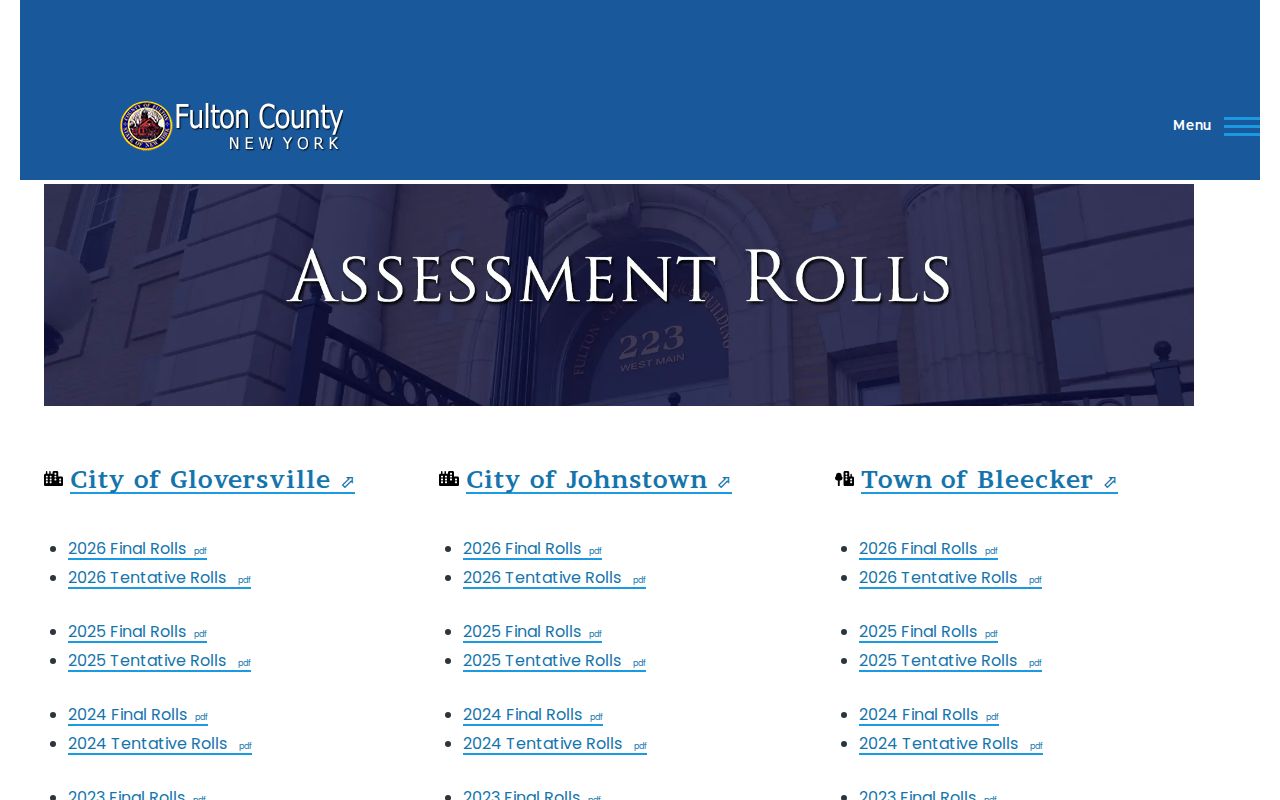
The archived files give a stable annual reference. Use them when a live parcel card has shifted since an earlier transaction or note.
Resolve Address and Municipality Confusion
Postal geography can mislead in Fulton County. The City and Town of Johnstown share 12095, and Gloversville's 12078 postal area reaches beyond the city line. A mailing place never identifies the assessor or settles jurisdiction. Confirm the municipality on the assessment record, then use the SBL to match the Clerk index and tax map. Mailing and situs addresses also play different roles. A remote owner, entity, or tax-bill agent may receive mail somewhere else entirely. The mailing address proves no one lives there, and the situs alone proves no ownership.
Handle Splits and Combinations Before Naming an Owner
Parcels do not always stay still. One deed can describe land later split into several tax parcels. An assessor may also combine lots under a single SBL. Gloversville's planning record for 342 South Kingsboro Avenue documents an assessment-combined property. That record includes a proposed two-lot subdivision. That case shows why the current SBL, older SBLs, filed maps, and the deed description may all matter. When the legal description and parcel shape disagree, ask RPTSA about identifier history. Ask the Clerk about recorded maps or deeds. Never assume a planning proposal, tax-map edit, or address assignment transferred title by itself.
Respect Protected Address Information
New York's Address Confidentiality Program lets eligible participants use a substitute address. State and local agencies must accept that address and shield the real location. Owner research should report only what an official record lawfully displays. It should never try to defeat a confidentiality protection.
Owner-record limit. The current owner of record is a dated public-record finding, not a guarantee of clear title, occupancy, residence, or authority to contact a person.
Document a Defensible Fulton Current-Owner Finding
Save the parcel SBL, municipality, access date, roll year, exact owner display, latest matching deed reference, recording date, and any discrepancy you noticed. If the answer affects a purchase, inheritance, boundary, or legal dispute, obtain the instrument and get proper title or legal help. Fulton County itself recommends an abstract company for a complete search.
Owner of record means the person named in the official record you cite, while vesting describes exactly how the deed states that ownership. Two more fields anchor the finding: the recording date is when the Fulton Clerk accepted the instrument, and the roll year identifies the assessment cycle it represents.
Recheck the Fulton Current Owner After a Recent Transfer
A freshly recorded deed can make the tax roll lag behind the deed records. Save the recording reference first. Then compare the parcel again once the assessment system updates. Keep the earlier roll result too, dated as a snapshot, so the Fulton property records show a transparent trail. That preserves an honest current-owner record instead of implying one office made a mistake.